random header image

Merck & Co. found liable for $253.4 million in Texas man’s Vioxx-related death

">
Merck & Co. found liable for $253.4 million in Texas man’s Vioxx-related death

Friday, August 19, 2005

Drug maker Merck & Co. was found liable for a person’s death concerning the use of the pain medication Vioxx, according to a jury verdict in a Texas court.

The plaintiff’s case, headed by the widow of Robert Ernst, who died in 2001 of an irregular heartbeat and of clogged arteries while on the drug Vioxx, was successfully awarded $253.4 million dollars. Vioxx was pulled from the shelves in 2004 after a study discovered it could double the risk of a heart attack or stroke if taken for longer than 1.5 years. However, the US government agency, the FDA, decided in February of this year to allow the product back on the shelves.

Merck’s stock price dropped 10% within minutes of the verdict being announced, and continued to fall hours after. There are in excess of 4,200 other Vioxx-related lawsuits pending across the USA.

The company plans to appeal the decision.

Retrieved from “https://en.wikinews.org/w/index.php?title=Merck_%26_Co._found_liable_for_$253.4_million_in_Texas_man%27s_Vioxx-related_death&oldid=2459903”

Lebanon fighting escalates as UN debates ceasefire

">
Lebanon fighting escalates as UN debates ceasefire

Sunday, August 6, 2006

Fifteen Israelis were killed and more than 115 injured in an attack that saw more than 180 missiles hit towns in northern Israel Sunday. At least seven rockets hit Haifa, Israel‘s third largest city, killing three and injuring more than 100. Other missiles have hit the Ma’alot, Carmiel and Kiryat Shmona.

Twelve reserve soldiers died when a Hezbollah missile hit Kfar Giladi in Israel. “The scene is very difficult, it can be described as a battlefield,” Shimon Abutbul, a rescue worker at the scene said. “There was a lot of blood.”

In Lebanon, 17 people were killed as Israeli warplanes and artillery struck southern Lebanon. Three Chinese UN peacekeepers were injured when a rocket landed near their post.

Israeli jets also struck the southern suburbs of Beirut.

Israel has announced the detention of a Hezbollah combatant suspected of being involved in the kidnapping of two Israeli soldiers that prompted the Israeli incursion into Lebanon last month.

The mounting casualties occur as the UN Security Council continues discussions on a draft resolution to halt the fighting. France and the United States have agreed to the wording of a decree which is expected to come to a vote on Monday or Tuesday.

The draft calls for the “full cessation of hostilities based upon, in particular, the immediate cessation by Hezbollah of all attacks and the immediate cessation by Israel of all offensive military operations”.

The pending resolution has been welcomed by Israel but condemned by the Syrian foreign minister, Wallid Muallem, who called it a “recipe for the continuation of the war”. A senior Lebanese official has said his country would reject the resolution because it does not ask that Israeli forces withdraw from Lebanese soil.

Retrieved from “https://en.wikinews.org/w/index.php?title=Lebanon_fighting_escalates_as_UN_debates_ceasefire&oldid=4540988”

Volvo announces all new car models electric or hybrid from 2019

">
Volvo announces all new car models electric or hybrid from 2019

Friday, July 7, 2017

On Wednesday, automobile company Volvo announced all of its cars to be released in 2019 onwards are to use some form of battery-powered engine, leaving conventional petrol-only vehicles altogether. The decision comes after Volvo announced in May their intent to cease production of diesel vehicles.

The chief executive of Volvo Cars, Håkan Samuelsson, said, “People increasingly demand electrified cars”. Volvo aims to release five new electric vehicle models between 2019 and 2021. While little has yet been revealed about them, the company has stated two of them are to be high-performance electric vehicles, branded as Polestars.

Other car models from 2019 may be plug-in hybrid or 48-volt “mild hybrid” systems. Audi and Mercedes-Benz are also releasing mild hybrid cars for the European market.

“This announcement marks the end of the solely combustion engine-powered car. Volvo Cars has stated that it plans to have sold a total of 1m electrified cars by 2025. When we said it we meant it. This is how we are going to do it,” Samuelsson said. Volvo is owned by Chinese automotive giant Geely, and China’s Ministry of Industry and Information Technology has said by 2025 they want new vehicle sales to be 20 percent “new energy vehicles”.

Retrieved from “https://en.wikinews.org/w/index.php?title=Volvo_announces_all_new_car_models_electric_or_hybrid_from_2019&oldid=4332399”

A Pragmatic Approach To Debt Problems}

Submitted by: Mike Curry

When most people think of how they would feel if they were in debt, they imagine experiencing despair and fear. However, new research shows that a large proportion of debtors actually adopt a pragmatic approach to their situation.

Being faced with debt does cause many people to feel stressed and unhappy. In fact, a quarter of people in debt receive treatment for stress, depression and anxiety from the NHS. Furthermore, the despair caused by financial problems is also a key reason why many couples break up.

However, there is another large group of debtors who adopt a pragmatic attitude to their predicament rather than struggling with feelings of fear and being out of control.

New research carried out by the Clear Start Consumer Debt Service suggests that living with increasingly high levels of debt has become an accepted and normal state of affairs for many people. For these people, debt is considered to be an inevitable and likely permanent feature of everyday life.

The Clear Start studies suggested that 47% of UK consumers say they are happy to have short-term debt to allow them to buy the things they want.

One of the main reasons for this increasingly prevalent attitude to debt is the disappearance of the Puritan Work Ethic. This stressed the importance of saving over spending and its erosion has led to the social acceptability of debt.

The good thing about this is that people with a pragmatic attitude to debt are less reluctant to admit that they have problems and to seek help. After all the reason most frequently given by debtors for not getting help is that they were embarrassed and ashamed about their problems. And when it comes to debt, getting advice from impartial sources as quickly as possible is crucial in resolving problems speedily.

These days there are so many debt solutions; such as the government introduced Individual Voluntary Arrangement (IVA). The IVA is an alternative to bankruptcy which allows people with debts of over 15,000 to make affordable monthly repayments and have the amount they owe reduced. This means that there are solutions to meet nearly all situations.

By adopting a pragmatic attitude towards debt, people in financial difficulties are able to get the help they need so that they can identify the best solution for them and make a fresh start.

About the Author: Clear Start is a free UK consumer debt advice line. Please visit the website (

clearstart.org

)for free and impartial debt advice or telephone 0800 138 5445.

Source:

isnare.com

Permanent Link:

isnare.com/?aid=33827&ca=Finances}

Category:June 1, 2010

">
Category:June 1, 2010
? May 31, 2010
June 2, 2010 ?
June 1

Pages in category “June 1, 2010”

Retrieved from “https://en.wikinews.org/w/index.php?title=Category:June_1,_2010&oldid=1333764”

Wikinews interviews World Wide Web co-inventor Robert Cailliau

">
Wikinews interviews World Wide Web co-inventor Robert Cailliau

Thursday, August 16, 2007

The name Robert Cailliau may not ring a bell to the general public, but his invention is the reason why you are reading this: Dr. Cailliau together with his colleague Sir Tim Berners-Lee invented the World Wide Web, making the internet accessible so it could grow from an academic tool to a mass communication medium. Last January Dr. Cailliau retired from CERN, the European particle physics lab where the WWW emerged.

Wikinews offered the engineer a virtual beer from his native country Belgium, and conducted an e-mail interview with him (which started about three weeks ago) about the history and the future of the web and his life and work.

Wikinews: At the start of this interview, we would like to offer you a fresh pint on a terrace, but since this is an e-mail interview, we will limit ourselves to a virtual beer, which you can enjoy here.

Robert Cailliau: Yes, I myself once (at the 2nd international WWW Conference, Chicago) said that there is no such thing as a virtual beer: people will still want to sit together. Anyway, here we go.

Retrieved from “https://en.wikinews.org/w/index.php?title=Wikinews_interviews_World_Wide_Web_co-inventor_Robert_Cailliau&oldid=4608361”

India set to install panic buttons on buses to combat sexual assault

">
India set to install panic buttons on buses to combat sexual assault

Friday, May 27, 2016

The Indian Government announced on Wednesday they will issue a notification to ensure all buses are fitted with panic buttons to prevent sex-related violence occurring on buses in India. The motion was introduced by Road Transport and Highways Minister Nitin Gadkari. Installation of the buttons is set to become mandatory on June 2.

Tests are under way on 20 buses running from Rajasthan to New Delhi. Buses are to have panic buttons, a GPS-enabled vehicle tracking device, and CCTV cameras. The new buttons are located at the front doors and when pressed, a police control room has the ability to view live footage recorded inside the bus.

Last month, the government announced that as of 2017, mobile phones can’t be sold in India without a panic button. With the press of a single key, the panic button alerts emergency services that assistance is required.

Since a fatal sexual assault three and a half years ago on a bus in New Delhi, accompanied by increased rates of sexual assault, the government has been pressured to help women avoid the dangers of sexual assault. The bus sexual assault three and a half years ago resulted in India-wide protests, and laws regarding sexual assault were overhauled.

According to India’s National Crime Records Bureau (NCRB), in 2014 New Delhi reported 1,813 rapes, more than any other Indian city. In more than 80% of rapes across India, the victim knew the rapist. In data from 2013, the rapists in 539 cases were parents, in 2,315 cases other relatives.

In 2012 the NCRB said the country had 24,923 reported rapes. However, this number grew over the following year, with 2013 seeing 33,707 reported.

In 2013, NCRB said New Delhi saw 1,636 rapes reported, with an Indian average of 92 women per day. The New Delhi cases alone account for more than four per day.

Retrieved from “https://en.wikinews.org/w/index.php?title=India_set_to_install_panic_buttons_on_buses_to_combat_sexual_assault&oldid=4221664”

How Important Is Health Care

Healthcare is the general term used for the entire area of prevention, treatment and cure of illness and disease using the services of medical experts and resources. The World Health Organizations definition is a little different and refers more to the prevention of illness and services to encourage this, in addition to intervention that should be available to a single person as well as a whole population. The organized provision of such facilities may constitute a healthcare system.The term health care has not always been used though and prior to this is it was often just referred to medicine or the health sector but this was used more by English speaking nations. In most developed nations and many developing nations healthcare is provided to everyone regardless of their ability to pay. This first begun in the UK a few years after the end of World War 2 in 1948, and became the first healthcare service set up and run by a administration.Instead a system of compulsory government funded health insurance with nominal fees can be provided, as with Italy, which, according to The World Health Organization, has the second-best health system in the world. Canada and Australia have both begun similar systems and have been running since almost twenty and the 1970’s respectively both going by the name of Medicare. The main nations that do not support this general healthcare service are The United States and South Africa, although they are making reforms to their health service. health care professionals are dedicated to preventing illness and disease mainly, but also to treat and protect the long term health of their patients.Worldwide, over recent decades, there has been a huge growth in the sum of money spent on health care and it is now one of the fastest growing sectors in every developed country with an average cost of ten percent of the gross domestic product. America has seen some of the biggest rises and the figures in 2006 are anticipated to be the same as 2003 with over 15 percent of GDP – it is currently the biggest in the world but the increase by 2016 is expected to be almost twenty percent.currently in the America over 180 million citizens are looking for health care and it will be no surprise to learn that it is top of all concerns for those in and seeking work. A issue which came to a head when General Motors was seriously considering bankruptcy over the strain its health car plan was putting on the company. It was only after negotiations with the unions to reduce certain health benefits and the subsequent sell off of its poorly performing finance division that stopped the unthinkable from occurring.Workers in The United States place this as their number one priority when looking for a prospective employer and often will move to a lower paid position just to improve their medical care. Perhaps it is time healthcare was looked at in a different way and perhaps called health preservation with an accent on fitness and health to ease the need for a top heavy healthcare system which is becoming a global problem.

Cleveland, Ohio clinic performs US’s first face transplant

">
Cleveland, Ohio clinic performs US’s first face transplant
By Admin | Posted in Uncategorized

Thursday, December 18, 2008

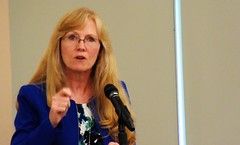
A team of eight transplant surgeons in Cleveland Clinic in Ohio, USA, led by reconstructive surgeon Dr. Maria Siemionow, age 58, have successfully performed the first almost total face transplant in the US, and the fourth globally, on a woman so horribly disfigured due to trauma, that cost her an eye. Two weeks ago Dr. Siemionow, in a 23-hour marathon surgery, replaced 80 percent of her face, by transplanting or grafting bone, nerve, blood vessels, muscles and skin harvested from a female donor’s cadaver.

The Clinic surgeons, in Wednesday’s news conference, described the details of the transplant but upon request, the team did not publish her name, age and cause of injury nor the donor’s identity. The patient’s family desired the reason for her transplant to remain confidential. The Los Angeles Times reported that the patient “had no upper jaw, nose, cheeks or lower eyelids and was unable to eat, talk, smile, smell or breathe on her own.” The clinic’s dermatology and plastic surgery chair, Francis Papay, described the nine hours phase of the procedure: “We transferred the skin, all the facial muscles in the upper face and mid-face, the upper lip, all of the nose, most of the sinuses around the nose, the upper jaw including the teeth, the facial nerve.” Thereafter, another team spent three hours sewing the woman’s blood vessels to that of the donor’s face to restore blood circulation, making the graft a success.

The New York Times reported that “three partial face transplants have been performed since 2005, two in France and one in China, all using facial tissue from a dead donor with permission from their families.” “Only the forehead, upper eyelids, lower lip, lower teeth and jaw are hers, the rest of her face comes from a cadaver; she could not eat on her own or breathe without a hole in her windpipe. About 77 square inches of tissue were transplanted from the donor,” it further described the details of the medical marvel. The patient, however, must take lifetime immunosuppressive drugs, also called antirejection drugs, which do not guarantee success. The transplant team said that in case of failure, it would replace the part with a skin graft taken from her own body.

Dr. Bohdan Pomahac, a Brigham and Women’s Hospital surgeon praised the recent medical development. “There are patients who can benefit tremendously from this. It’s great that it happened,” he said.

Leading bioethicist Arthur Caplan of the University of Pennsylvania withheld judgment on the Cleveland transplant amid grave concerns on the post-operation results. “The biggest ethical problem is dealing with failure — if your face rejects. It would be a living hell. If your face is falling off and you can’t eat and you can’t breathe and you’re suffering in a terrible manner that can’t be reversed, you need to put on the table assistance in dying. There are patients who can benefit tremendously from this. It’s great that it happened,” he said.

Dr Alex Clarke, of the Royal Free Hospital had praised the Clinic for its contribution to medicine. “It is a real step forward for people who have severe disfigurement and this operation has been done by a team who have really prepared and worked towards this for a number of years. These transplants have proven that the technical difficulties can be overcome and psychologically the patients are doing well. They have all have reacted positively and have begun to do things they were not able to before. All the things people thought were barriers to this kind of operations have been overcome,” she said.

The first partial face transplant surgery on a living human was performed on Isabelle Dinoire on November 27 2005, when she was 38, by Professor Bernard Devauchelle, assisted by Professor Jean-Michel Dubernard in Amiens, France. Her Labrador dog mauled her in May 2005. A triangle of face tissue including the nose and mouth was taken from a brain-dead female donor and grafted onto the patient. Scientists elsewhere have performed scalp and ear transplants. However, the claim is the first for a mouth and nose transplant. Experts say the mouth and nose are the most difficult parts of the face to transplant.

In 2004, the same Cleveland Clinic, became the first institution to approve this surgery and test it on cadavers. In October 2006, surgeon Peter Butler at London‘s Royal Free Hospital in the UK was given permission by the NHS ethics board to carry out a full face transplant. His team will select four adult patients (children cannot be selected due to concerns over consent), with operations being carried out at six month intervals. In March 2008, the treatment of 30-year-old neurofibromatosis victim Pascal Coler of France ended after having received what his doctors call the worlds first successful full face transplant.

Ethical concerns, psychological impact, problems relating to immunosuppression and consequences of technical failure have prevented teams from performing face transplant operations in the past, even though it has been technically possible to carry out such procedures for years.

Mr Iain Hutchison, of Barts and the London Hospital, warned of several problems with face transplants, such as blood vessels in the donated tissue clotting and immunosuppressants failing or increasing the patient’s risk of cancer. He also pointed out ethical issues with the fact that the procedure requires a “beating heart donor”. The transplant is carried out while the donor is brain dead, but still alive by use of a ventilator.

According to Stephen Wigmore, chair of British Transplantation Society’s ethics committee, it is unknown to what extent facial expressions will function in the long term. He said that it is not certain whether a patient could be left worse off in the case of a face transplant failing.

Mr Michael Earley, a member of the Royal College of Surgeon‘s facial transplantation working party, commented that if successful, the transplant would be “a major breakthrough in facial reconstruction” and “a major step forward for the facially disfigured.”

In Wednesday’s conference, Siemionow said “we know that there are so many patients there in their homes where they are hiding from society because they are afraid to walk to the grocery stores, they are afraid to go the the street.” “Our patient was called names and was humiliated. We very much hope that for this very special group of patients there is a hope that someday they will be able to go comfortably from their houses and enjoy the things we take for granted,” she added.

In response to the medical breakthrough, a British medical group led by Royal Free Hospital’s lead surgeon Dr Peter Butler, said they will finish the world’s first full face transplant within a year. “We hope to make an announcement about a full-face operation in the next 12 months. This latest operation shows how facial transplantation can help a particular group of the most severely facially injured people. These are people who would otherwise live a terrible twilight life, shut away from public gaze,” he said.

Retrieved from “https://en.wikinews.org/w/index.php?title=Cleveland,_Ohio_clinic_performs_US%27s_first_face_transplant&oldid=4627150”
Comments (0)

Wikinews’ overview of the year 2007

">
Wikinews’ overview of the year 2007
By Admin | Posted in Uncategorized

Monday, December 31, 2007

What would you tell your grandchildren about 2007 if they asked you about it in, let’s say, 20 year’s time? If the answer to a quiz question was 2007, what would the question be? The year that you first signed on to Facebook? The year Britney Spears and Amy Winehouse fell apart? The year author Kurt Vonnegut or mime Marcel Marceau died, both at 84?

Let’s take a look at some of the international stories of 2007. Links to the original Wikinews articles are in bold.

Retrieved from “https://en.wikinews.org/w/index.php?title=Wikinews%27_overview_of_the_year_2007&oldid=4678722”
Comments (0)